
Slow Food & Agriculture · Food & Farming · Slow Life
What My Allotment Taught Me About Strategy
Published 29 January 2026 · By Jen Marsden
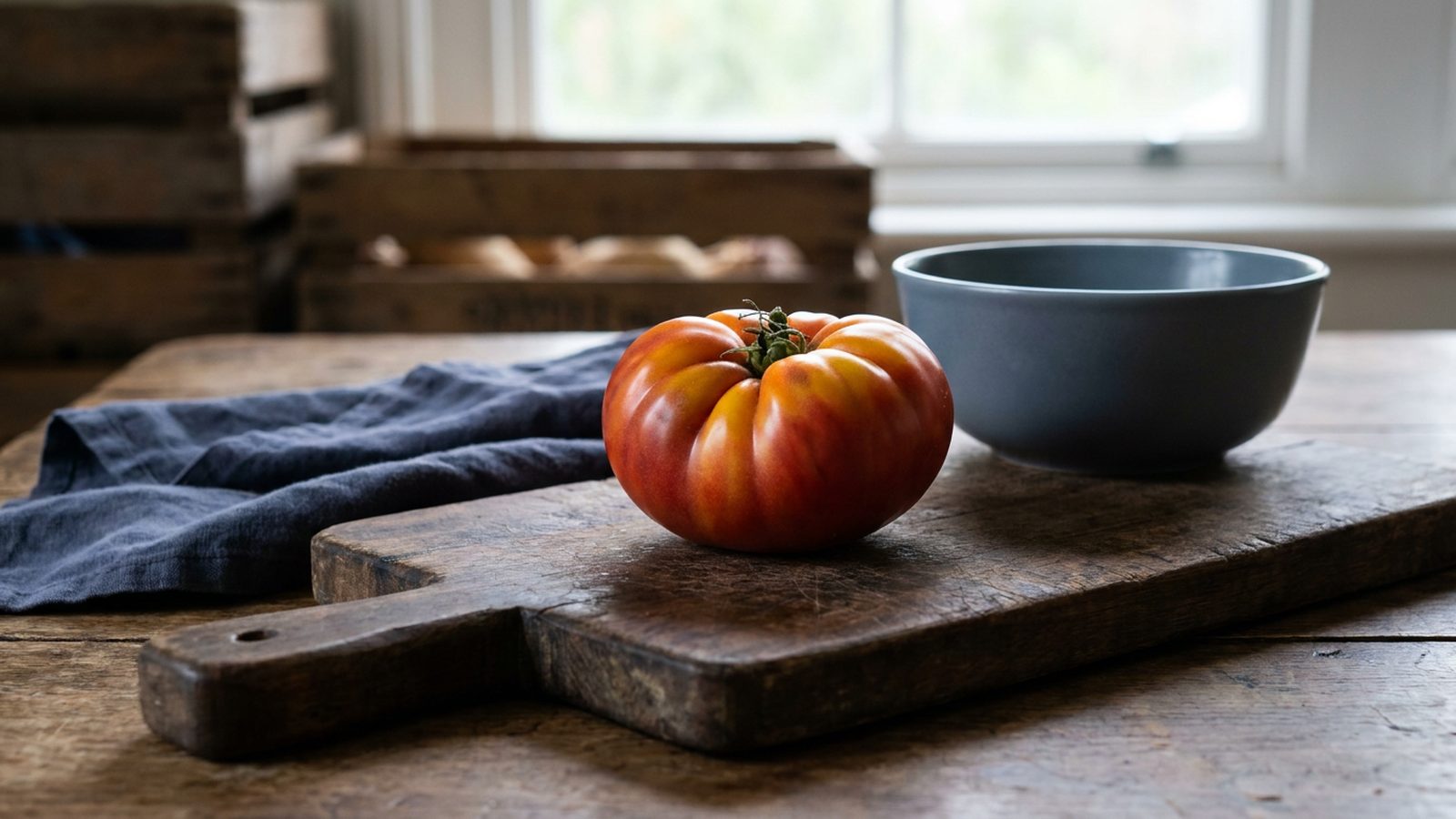
My allotment has taught me more about communications strategy than any conference I have ever attended, and it did so while I was on my knees in the mud, wondering why my supermarket-standard tomatoes tasted of almost nothing. The answer, when it came, changed how I think about the work I do.
I had started, as most people do, by growing the varieties everyone grows. The reliable ones, bred for uniform size, long shelf life, and the ability to survive being shipped halfway across a continent. They grew perfectly well. They looked exactly like the pictures. And they were, to put it kindly, dull. Then a neighbour on the next plot handed me a few seeds of an old heritage variety, knobbly and unpromising, with a name I could barely pronounce. What grew from those seeds was a revelation, and it started me thinking about far more than tomatoes.
Heritage varieties are the ones that have been saved and passed down over generations, kept alive by growers who valued flavour, character, and adaptation to a particular place over the commercial virtues of uniformity and durability. They are often stranger looking, less predictable, and less obliging to the supply chain. They are also, very often, incomparably better in the ways that actually matter to the person eating them. And in that trade-off I began to see a lesson that applies squarely to how brands communicate.
The problem with modern comms
So much of modern communication is grown like a commercial crop. Bred for uniformity, optimised to travel, engineered to give no offence and take no risk. It is the marketing equivalent of the perfectly round, perfectly red, perfectly flavourless tomato. It ships beautifully. Everyone recognises it. And it leaves absolutely no impression on the tongue. We have all consumed vast quantities of this kind of messaging, and we can remember precisely none of it, because there was nothing distinctive there to remember.
The heritage variety is the other way of doing things. It is a brand voice with genuine character, shaped by a particular history and a particular place, willing to be a little odd if odd is what makes it real. It does not optimise for universal blandness. It optimises for flavour, for the people who will taste the difference and come back for more. It will not appeal to absolutely everyone, and that is not a flaw. It is the whole point. The tomato that tastes of something is not trying to be liked by all. It is trying to be loved by some.
The core strategic lesson
This is the strategic lesson my allotment kept teaching me, season after season. Uniformity is safe and forgettable. Distinctiveness carries a little risk and is the only thing anyone remembers. When a brand sands off every edge in pursuit of mass appeal, it usually ends up appealing to no one in particular, because there is nothing left to hold on to. The heritage approach, choosing character over blandness, is riskier in the short term and vastly more rewarding over time.
There is a patience lesson in there too. Heritage varieties often ask more of the grower. They can be fussier, less predictable, slower to reward you. Building a communications approach with real character works the same way. It is easier, in the moment, to reach for the safe and standard option, the phrase everyone uses, the format that cannot fail because it also cannot succeed. Growing something with genuine flavour takes more care and more nerve, and it does not always pay off in the first season. But when it does, nothing else compares.
Value the unique and overlooked
I think about my neighbour’s gift often, those few unpromising seeds that turned out to hold something the supermarket had quietly bred out of existence. That is what distinctiveness is. It is the flavour the market forgot, kept alive by people who thought it was worth the trouble. In communications, as in the vegetable patch, it usually is.
So here is my gentle nudge, muddy hands and all. When you next shape how your brand sounds, resist the perfectly round, perfectly forgettable option. Choose the heritage variety. Choose flavour over shelf life, character over uniformity, and the risk of being memorable over the safety of being ignored. Plant something with a taste worth remembering, and give it the season it needs to grow.



Need words like these?
Let us write for you
Blogs, newsletters, brand copy and more, from a Highland collective that keeps it human.