
Travel & Place · Slow Life · Nature & Wildlife
How to Write a Customer Magazine That Inspires Bookings
Published 21 December 2025 · By Jen Marsden
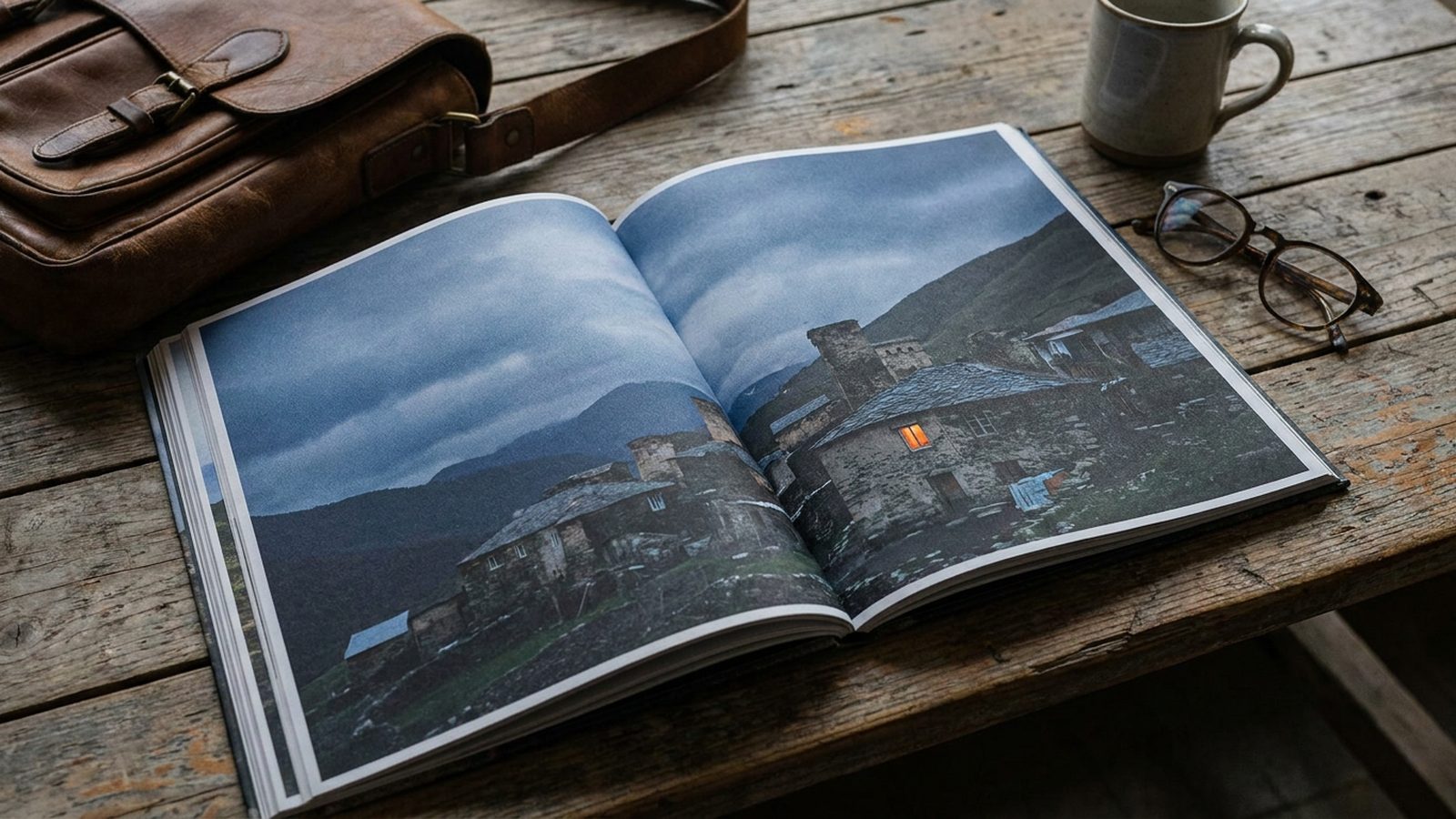
What makes someone close a travel magazine and reach for their phone to book? It is almost never the price. We have made a lot of customer magazines over the years, and if one lesson runs through every issue like a stick of rock, it is this. Story and place sell trips. Discounts sell nothing but doubt.
That runs against instinct, especially when budgets are tight and the temptation is to shout about a deal. But think about how you actually decide where to go. You do not fall in love with fifteen per cent off. You fall in love with a hill town at dusk, a description of a meal you can almost taste, a person whose life you suddenly want to glimpse. Desire comes first. Price is what you sort out afterwards, once you have already decided you want to go.
What makes a magazine effective
A customer magazine that inspires bookings understands its own job. It is not a catalogue with nicer paper. It is a desire machine. Here is how we build one.
Make place the hero, not the product. The quickest way to flatten a destination is to describe it as a set of features. Three pools, four restaurants, a spa. Nobody dreams in bullet points. Instead, put the reader inside the place. What does the morning smell of? What sound wakes you? What does the light do to the water at five o’clock? Sensory writing is not decoration. It is the mechanism by which a reader starts to imagine themselves there, and imagining is the first step to booking.
Make the destination personal
Find one person and let them carry the piece. A destination is an abstraction. A person is not. The fisherman who supplies the kitchen, the guide who knows every bird by its call, the owner who came home to restore her grandmother’s house. Build the article around a human being and the whole place comes into focus behind them. Readers book trips to meet people, even when they think they are booking scenery.
Write the trip they have not thought of yet. Anyone can promote the obvious. The magazine earns its keep when it opens a door the reader did not know was there. The quiet island next to the famous one. The month everyone overlooks. The walk that takes an extra day and rewards it tenfold. You are not just selling what your client already offers. You are enlarging what the reader thinks is possible, and that is where the surprising bookings come from.
Prioritise engaging content
Trust the long read. There is a fear that nobody reads any more, so everything gets chopped into fragments. Our experience is the opposite. Give a reader a genuinely good story of a thousand words and they will sink into it gratefully, because so little else asks for their attention properly. A magazine is a rare quiet space. Do not fill it with noise. Fill it with something worth staying for.
Let the pictures breathe and the captions work. A cramped page shouts. A generous one invites. Give your best image room, then make the caption earn its place with a real detail rather than a label. A caption that tells us the baker starts at four and still uses his father’s oven does more than a paragraph of adjectives elsewhere.
Put the booking path where the desire peaks. Here is the practical bit people forget. The moment a reader most wants to go is the moment they finish a story that moved them. That is where the gentle prompt belongs, not scattered through the page like confetti. Earn the desire first, then make acting on it effortless. A single clear line at the emotional high point beats a dozen nagging calls to action.
Understand the magazine’s purpose
The thing to hold onto is that a customer magazine is a gift before it is a sales tool. Readers can feel the difference between a publication that wants to entertain and enrich them and one that only wants their money. The first builds a relationship that brings them back for years. The second gets recycled with the junk mail.
So the next time you plan an issue, start not with what you want to sell but with what you want the reader to feel. Choose the place, find the person, tell the story properly, and put the invitation exactly where the longing lands. Get that order right and the bookings look after themselves.

Need words like these?
Let us write for you
Blogs, newsletters, brand copy and more, from a Highland collective that keeps it human.