
Ethical Fashion & Beauty · A Better World · Pioneers
Sustainable Cotton Storytelling: From Seed to Garment
Published 8 April 2026 · By Jen Marsden
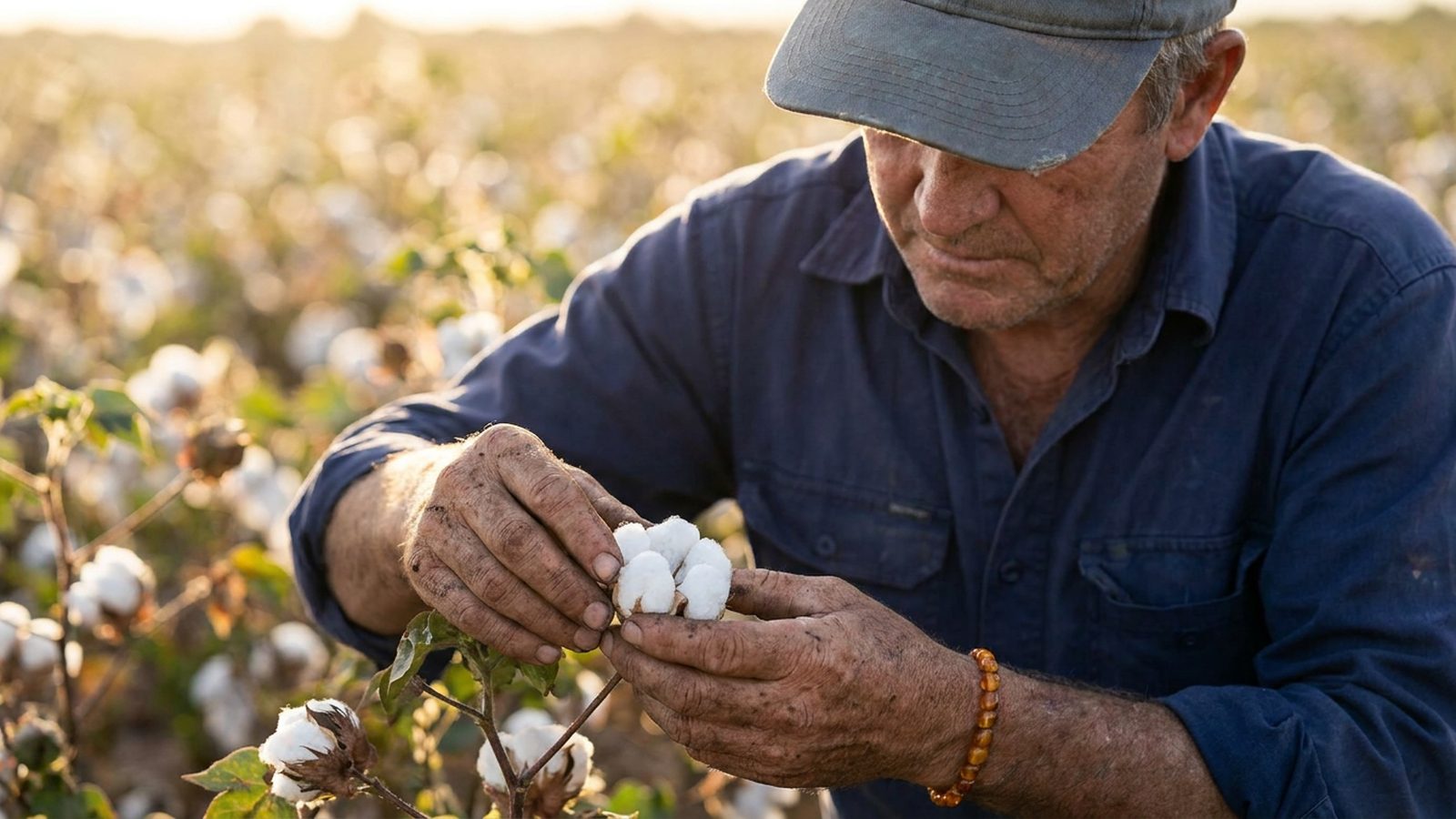
Where does your T-shirt actually begin? Not in the shop, not in the warehouse, but in a field, with a seed, and with a pair of hands you will never see. Cotton is one of the most familiar materials on earth and one of the most invisible in its origins. We wear it every day and know almost nothing about the journey that brought it to us.
I know this because I went and followed that journey. Working alongside Dibella and Chetna Organics, I traced the thread from farm to fabric, and it changed the way I think about telling these stories forever.
What most cotton stories miss
Here is what most cotton communication gets wrong. It skips the people. It talks about hectares and yields and certifications, all of which matter, and none of which make anyone feel anything. A supply chain described in statistics is a spreadsheet. A supply chain described through the humans inside it is a story, and stories are what actually move people to care, to trust, and to buy.
The human thread is the whole point. When you stand in a cotton field and meet the farmer who planted it, you stop thinking about cotton as a commodity and start thinking about it as the result of a thousand small decisions made by real people. The farmer choosing which seed to sow. The family deciding whether to invest in better irrigation. The worker at the gin, the spinner, the weaver, the dyer, each adding their labour and skill before the fabric ever reaches a cutting table. Every garment is, quite literally, a collaboration between people who will never meet each other or the person who ends up wearing it.
So how do you tell a cotton story that actually lands? Here is what I learned from following the thread myself.
How to tell an effective story
Start with a person, not a process. Do not open with “our sustainable cotton is sourced from certified farms.” Open with the farmer. Give them a name, a place, a face, a decision they made. The moment your audience can picture one real human at the start of the chain, the whole story becomes something they can hold onto rather than something they scroll past.
Show the choices, not just the outcomes. Sustainability is not a badge that appears at the end. It is a series of choices made all the way along, often by people with very little margin for error. When a farmer switches to a growing method that uses less water, that is a decision with real consequences for their livelihood and their family. Showing that choice, and what it cost and gained, is far more powerful than simply stamping “sustainable” on the finished label.
Respect the whole chain, not just the glamorous ends. It is tempting to focus on the field, which is photogenic, and the finished garment, which is aspirational, while skipping everything in between. But the ginning, spinning, and weaving are where enormous amounts of the human story live. The people in those middle stages are rarely celebrated and often the most skilled of all. Bring them into the frame.
Acknowledge the challenges
Do not sand off the difficult parts. When I followed the cotton chain, I did not find a fairy tale. I found real work, real challenges, and real progress being made against genuine odds. That is a better story than a perfect one, because it is true, and because people can feel the difference. A cotton story that admits the hard bits is a cotton story worth believing.
Let the audience feel the distance the thread travels. Part of what makes cotton extraordinary is how far it goes and how many hands touch it. When someone genuinely grasps that their everyday T-shirt connects them to a farmer, a spinner, and a weaver across the world, they hold that garment a little differently. They keep it longer. They value it more. That shift in feeling is worth more than any certification logo.
The thread that runs from seed to garment is, at its heart, a human one. It is made of people, choices, skill, and care, most of it invisible until someone bothers to tell the story properly. So if you are sitting on a cotton story you have not yet told, my nudge is simple. Go and find the people in it. Follow the thread. Then tell it as what it truly is, a story about human hands, and let that do the work.
Similar articles


Need words like these?
Let us write for you
Blogs, newsletters, brand copy and more, from a Highland collective that keeps it human.